

Butcher Block Oil






What is Butcher Block Oil?
Butcher block oil is a food-safe oil designed to protect, hydrate, and rejuvenate wooden kitchen surfaces. It is used on countertops, cutting boards, chopping blocks, and kitchen benches to prevent drying, cracking, and bacterial growth.
If you have timber surfaces in your kitchen, regular oiling is one of the most effective ways to extend their life and keep them hygienic.
What is Butcher Block Oil Used For?
Butcher block oil serves several important functions for wooden kitchen surfaces:
- Hydration: Keeps wood moisturised to prevent drying and cracking caused by frequent use and washing.
- Waterproofing: Nourishes timber and creates a protective barrier against water and food liquids seeping in.
- Sanitising: The citrus-thinner found in many butcher block oils helps clean wooden surfaces and reduces the conditions that allow bacteria to propagate.
- Rejuvenation: Brings out the deep natural colours of the wood and can disguise light knife marks.
Benefits of Using Butcher Block Oil
Regularly treating your wooden kitchen surfaces with butcher block oil offers a range of practical benefits:
- Rejuvenates and restores the appearance of worn or dull timber
- Sanitises surfaces and prevents bacterial growth
- Creates a waterproof barrier to protect against food and liquid damage
- Prevents cracking and drying caused by heat and moisture exposure
- Will not go off or become rancid over time
Gilly's food safe timber care range includes butcher block oils made from locally sourced, petrochemical-free ingredients suitable for all wooden kitchen surfaces.
How to Apply Butcher Block Oil
Applying butcher block oil is straightforward. Follow these steps for best results:
- Ensure the wooden surface is clean and completely dry before starting.
- Pour a generous amount of oil directly onto the surface.
- Use a soft cloth or paper towel to massage the oil into the wood, working in the direction of the grain.
- Allow the wood to absorb the oil for a minimum of 20 minutes, or ideally several hours to overnight.
- Wipe off any excess oil once absorption is complete.
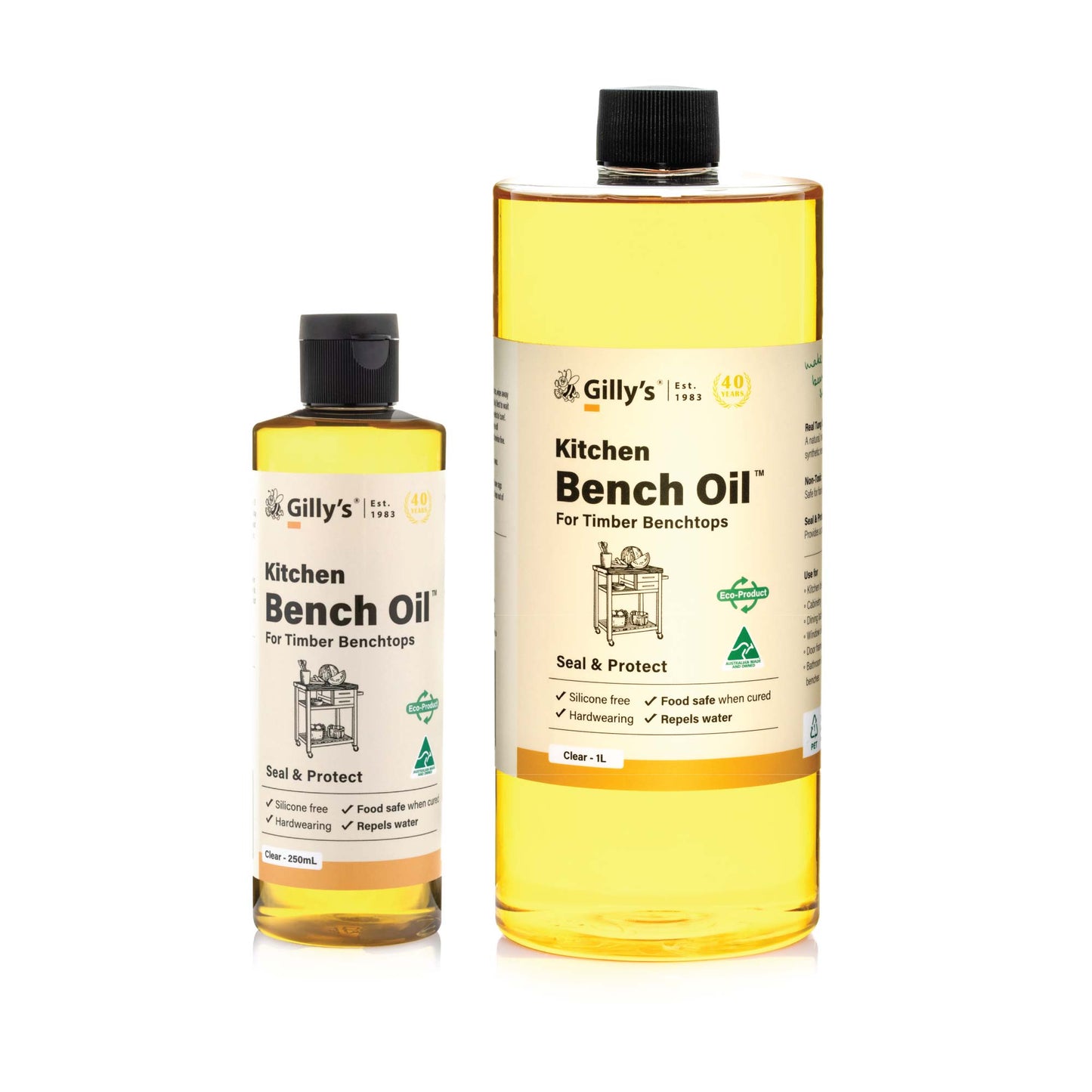
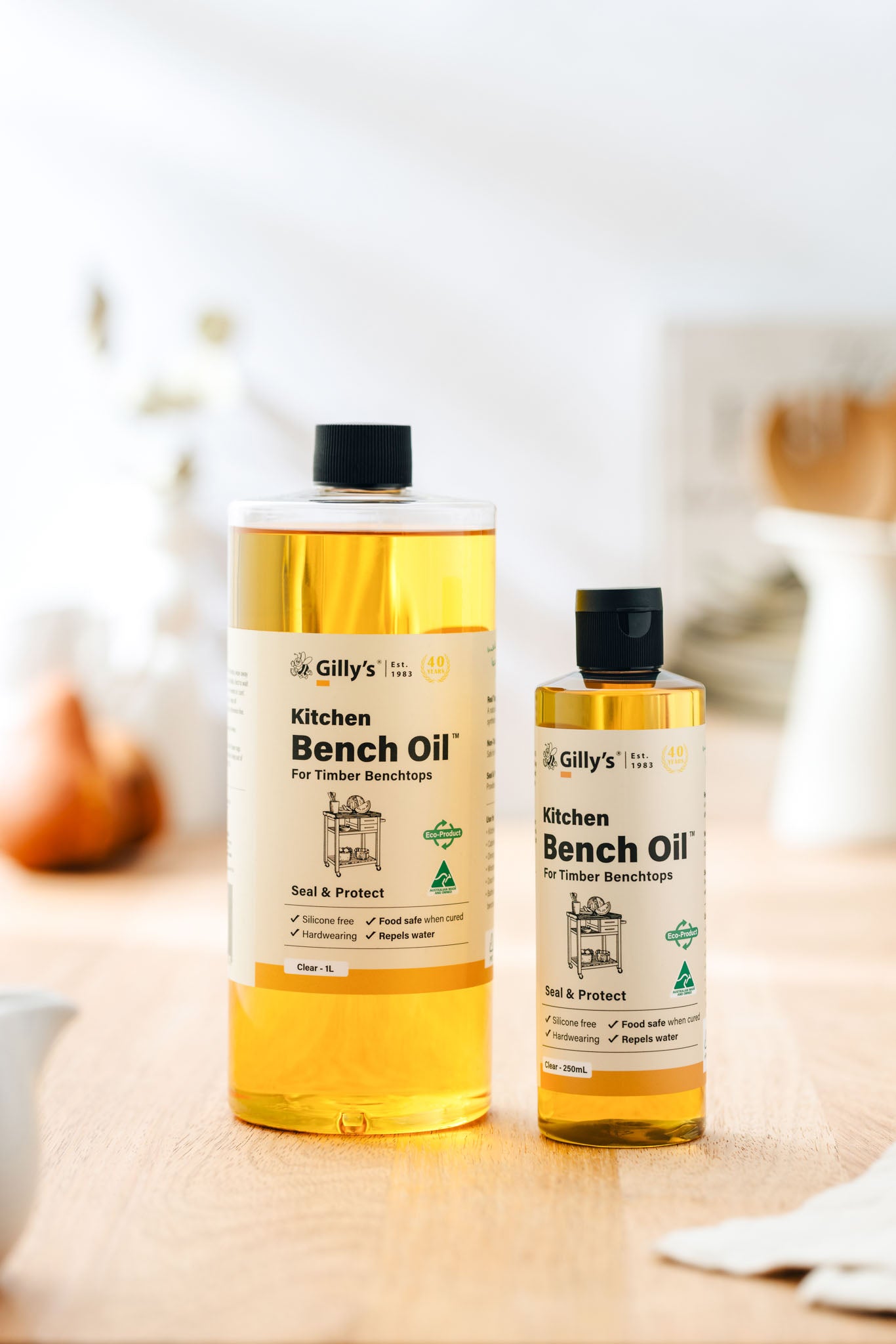
For timber benchtops and food preparation surfaces, Gilly's Kitchen Bench Oil is formulated specifically for this purpose and is simple to apply with a cloth or paper towel.
How Often Should You Oil a Butcher Block?
The frequency depends on whether the surface is new or already in use:
- New surfaces: Treat 2 to 4 times before first use, depending on how dry the timber is.
- Existing surfaces: Apply once a month, or whenever the surface begins to look dry or dull.
Is Butcher Block Oil Food Safe?
Yes. Butcher block oil is food safe when made from appropriate food-grade ingredients. A quality butcher block oil should be free from petrochemicals and synthetic additives, making it safe for surfaces that come into direct contact with food.
How to Choose the Best Butcher Block Oil
There are three main types of butcher block oil, each suited to different needs:
Natural Blend of Oils
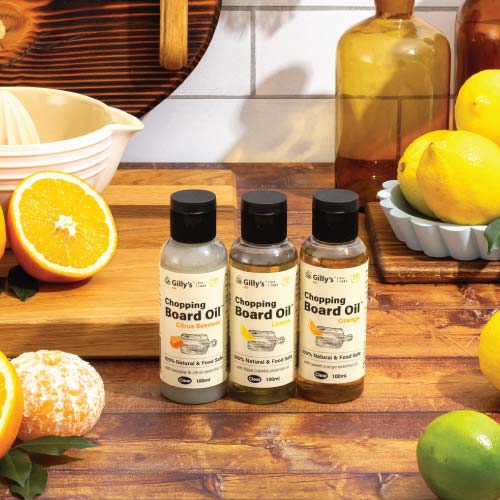
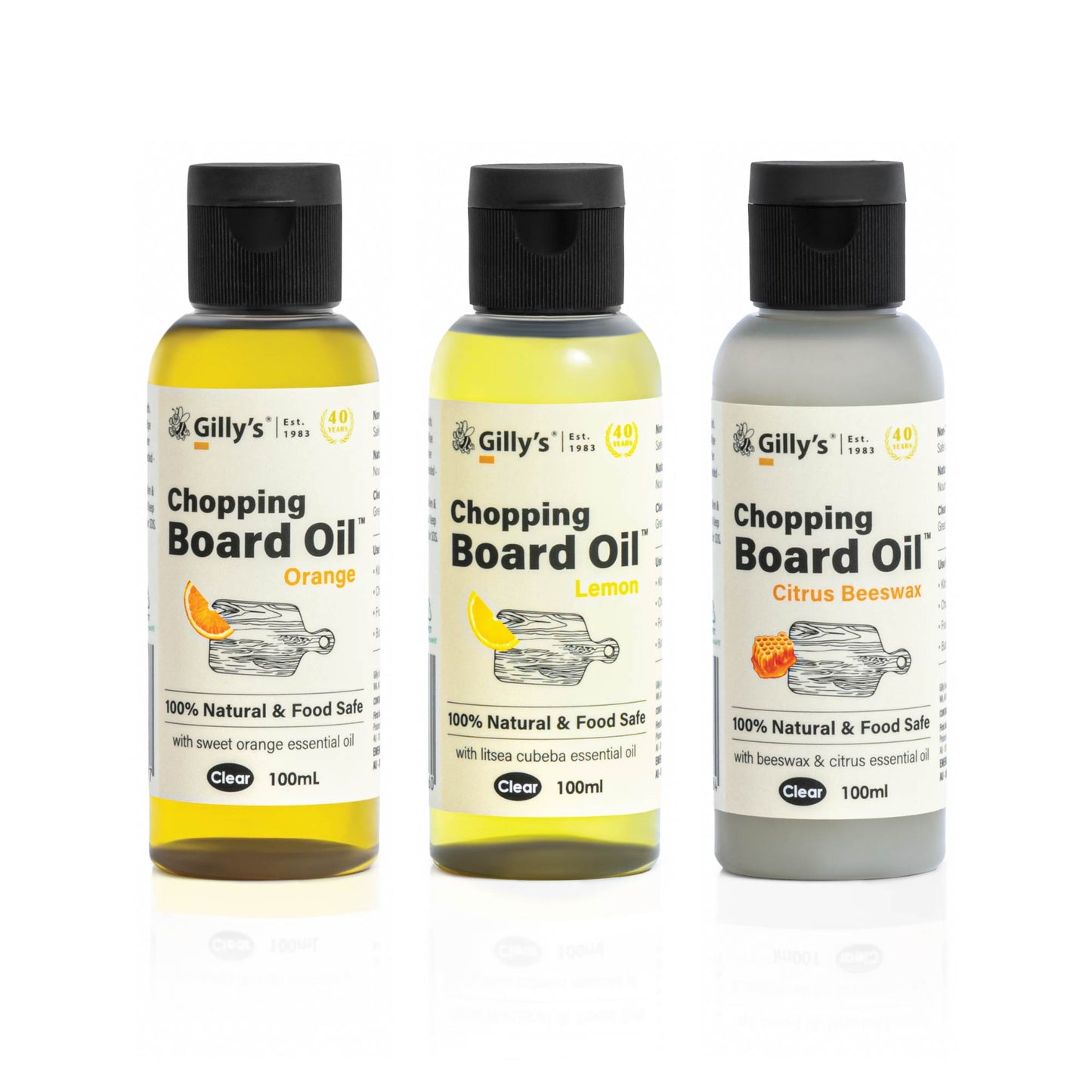
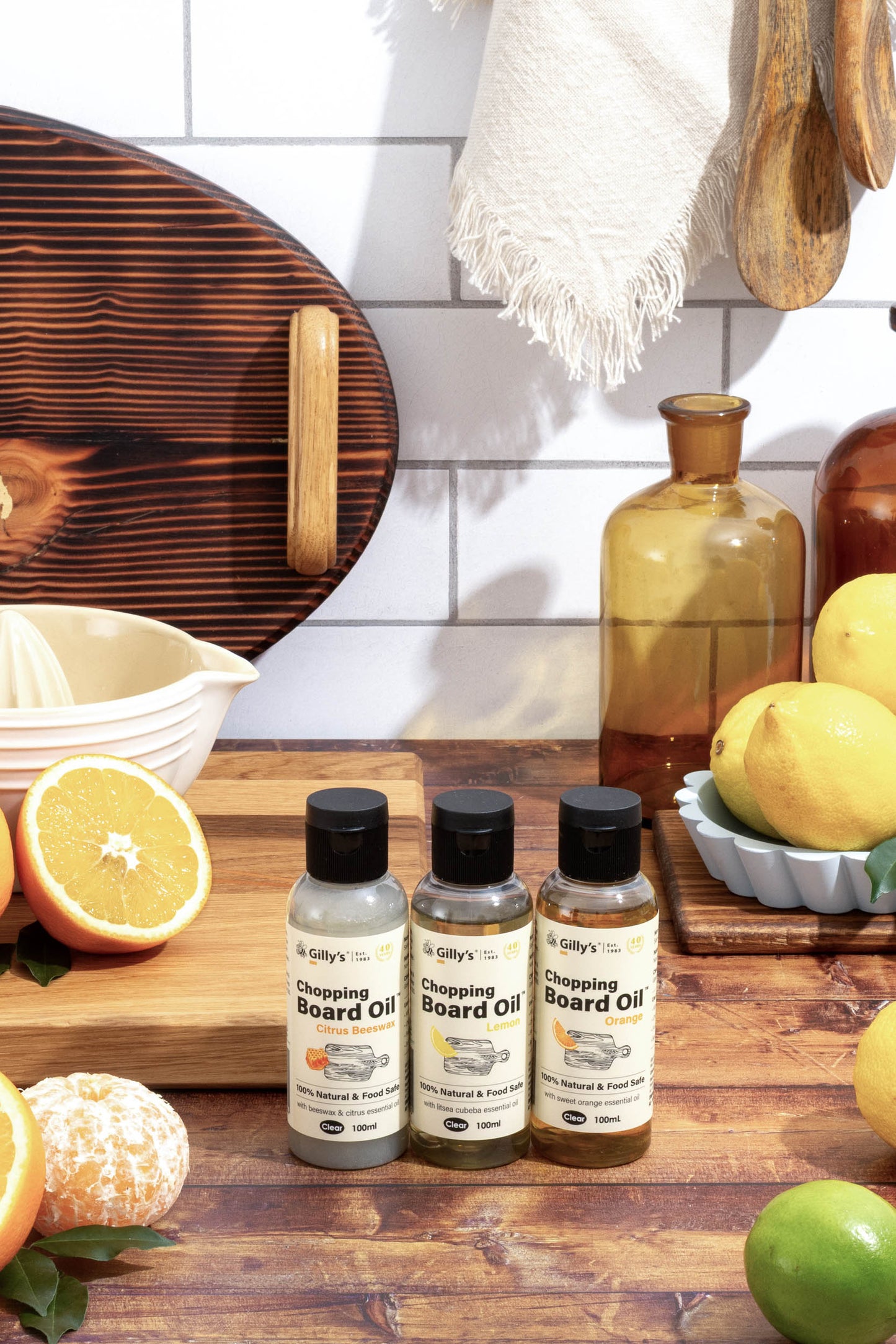
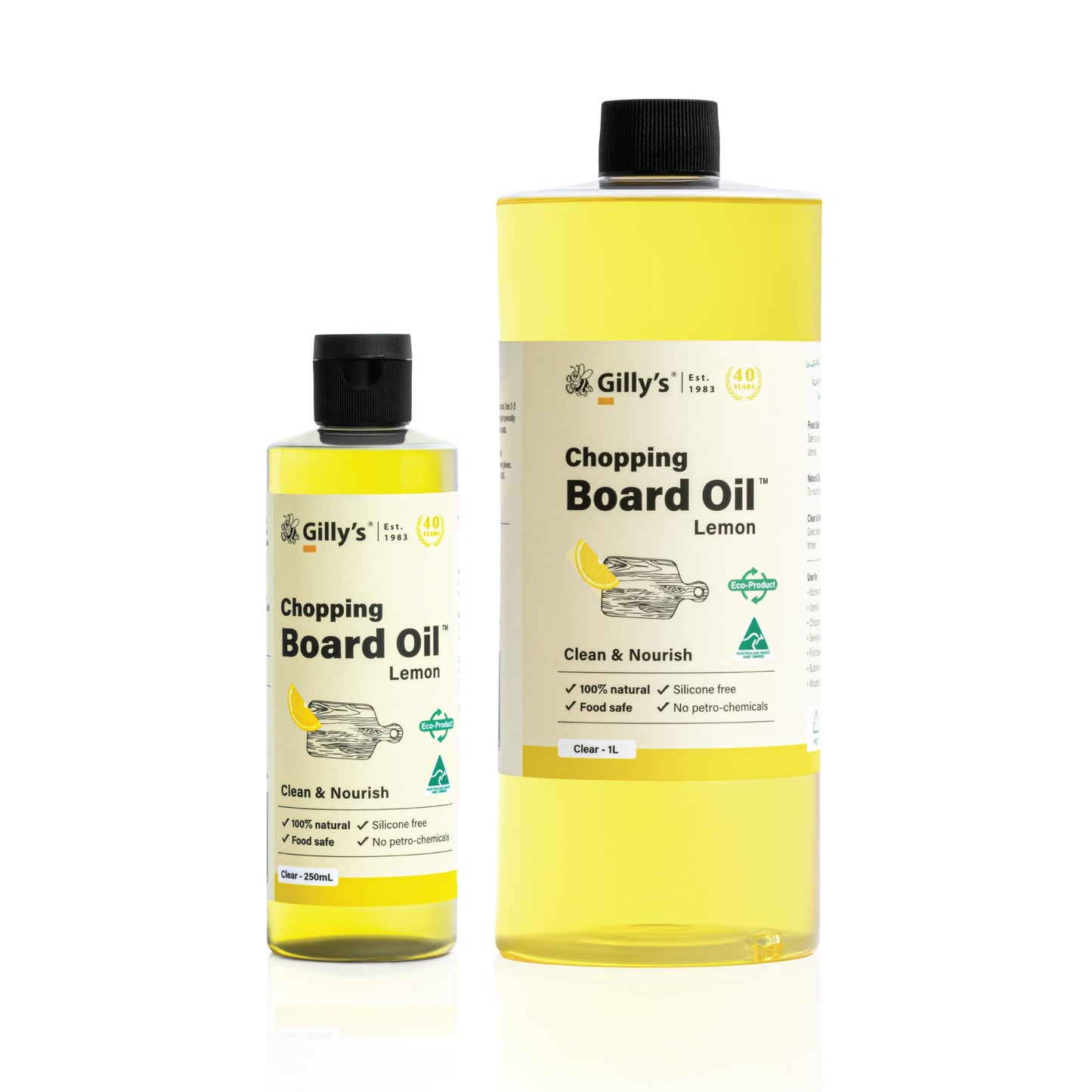
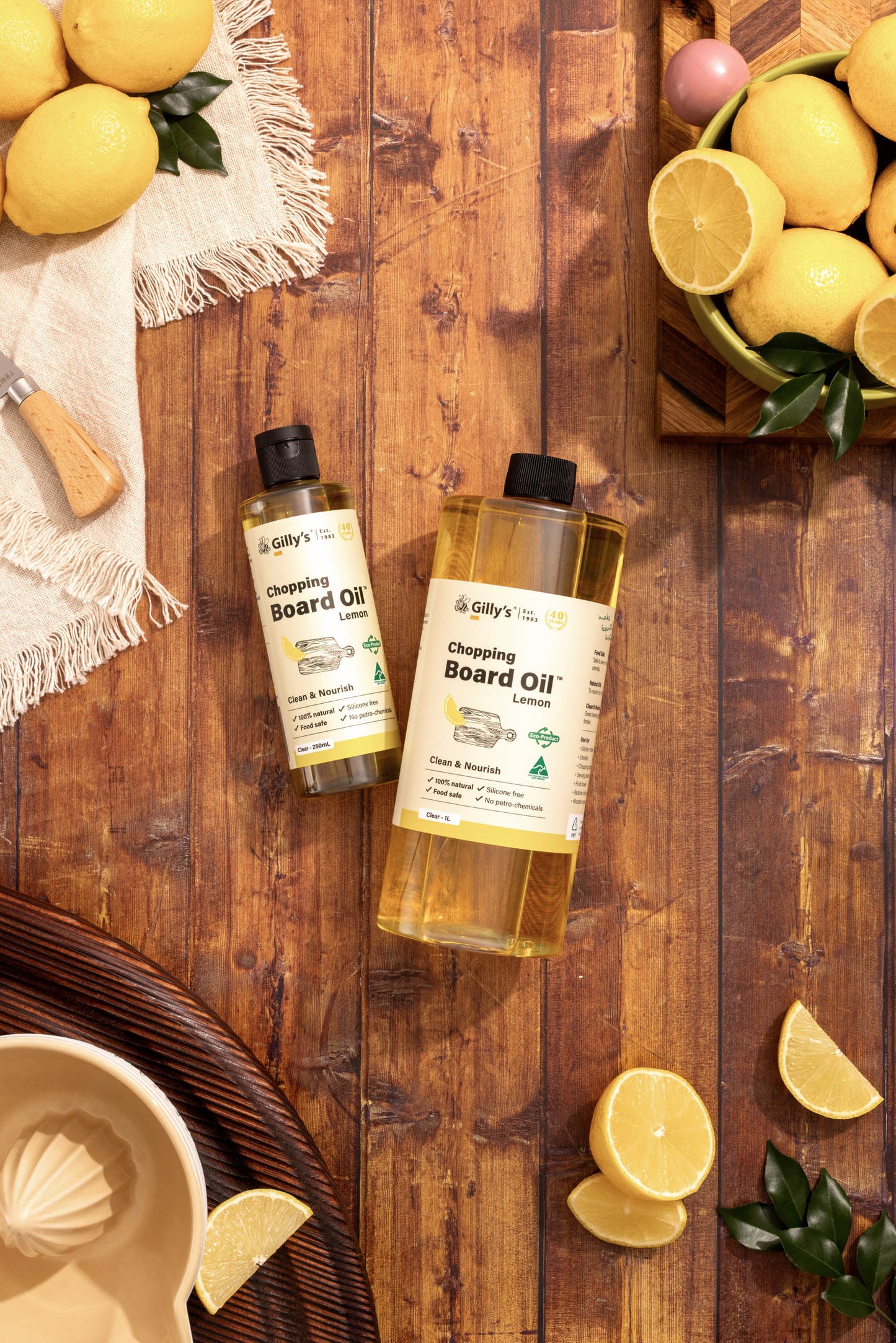
Best for regular maintenance. A natural oil blend penetrates deeply to protect and rejuvenate timber without any additives. Gilly's Chopping Board Oil is a natural blend formulated to keep wooden kitchen surfaces conditioned and protected with minimal effort.
Natural Oil and Beeswax Blends
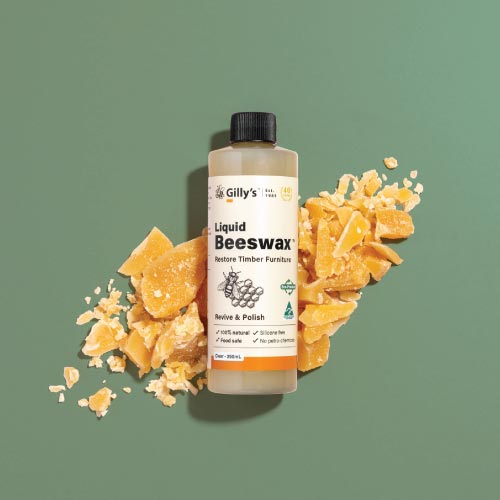
These products combine oil and wax to nourish and seal the wood in one step. Gilly's Chopping Board Oil in Citrus Beeswax is a strong example of this type. Browse the Gilly's beeswax collection for products that condition and seal in a single application.
Pure Tung Oil
Pure tung oil is a natural drying oil that provides a long-term, hard-wearing finish with superior water resistance. It takes longer to cure than blended oils but delivers a durable result suited to surfaces that require extra protection.
When selecting a butcher block oil, look for:
- Food grade or food-safe ingredients
- Products made specifically for timber kitchen surfaces
- Easy application requiring minimal tools or preparation
- A formula that suits your maintenance routine and budget
Butcher Block Oil vs Wax: What is the Difference?
Both oil and wax protect wooden kitchen surfaces, but they work differently and suit different situations.
| Feature | Butcher Block Oil | Butcher Block Wax |
|---|---|---|
| Primary function | Hydrates and nourishes wood from within | Seals and protects the surface layer |
| Best used for | New, dry, or thirsty timber | Day-to-day maintenance on already-oiled wood |
| Water resistance | Good | Strong surface barrier |
| Finish | Natural, matte appearance | Adds sheen and shine |
| Knife mark coverage | Reduces the appearance of light marks | Fills in small surface marks |
| Reapplication frequency | Monthly or as needed | More frequent reapplication required |
| Consistency | Liquid | Butter-like |
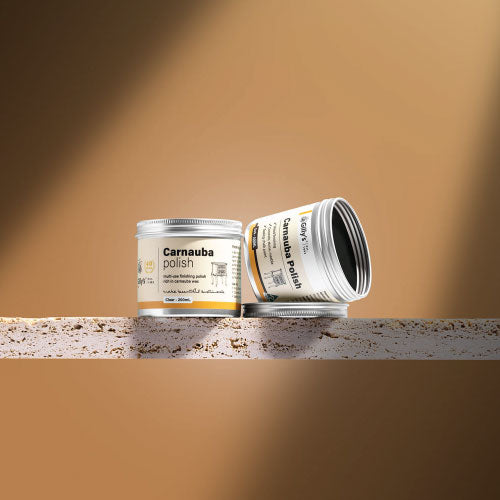
Best practice is to use both products together. Apply oil first to deeply nourish the timber, then seal the surface with wax for added protection and a polished finish. Explore the full Gilly's timber care range for oils and waxes that work in combination to keep wooden surfaces in top condition.
At Gilly's Australia, all butcher block oil products are food safe, petrochemical-free, and made from locally sourced ingredients.